From wastewater to resource: Inside Berkeley Vale's water revolution
Water plays a vital role in our manufacturing and operations, but we know that every drop counts when it comes to building a more sustainable future. So, by minimising water wastage across our business functions, we are working to reduce our environmental footprint and conserve essential resources for future generations.
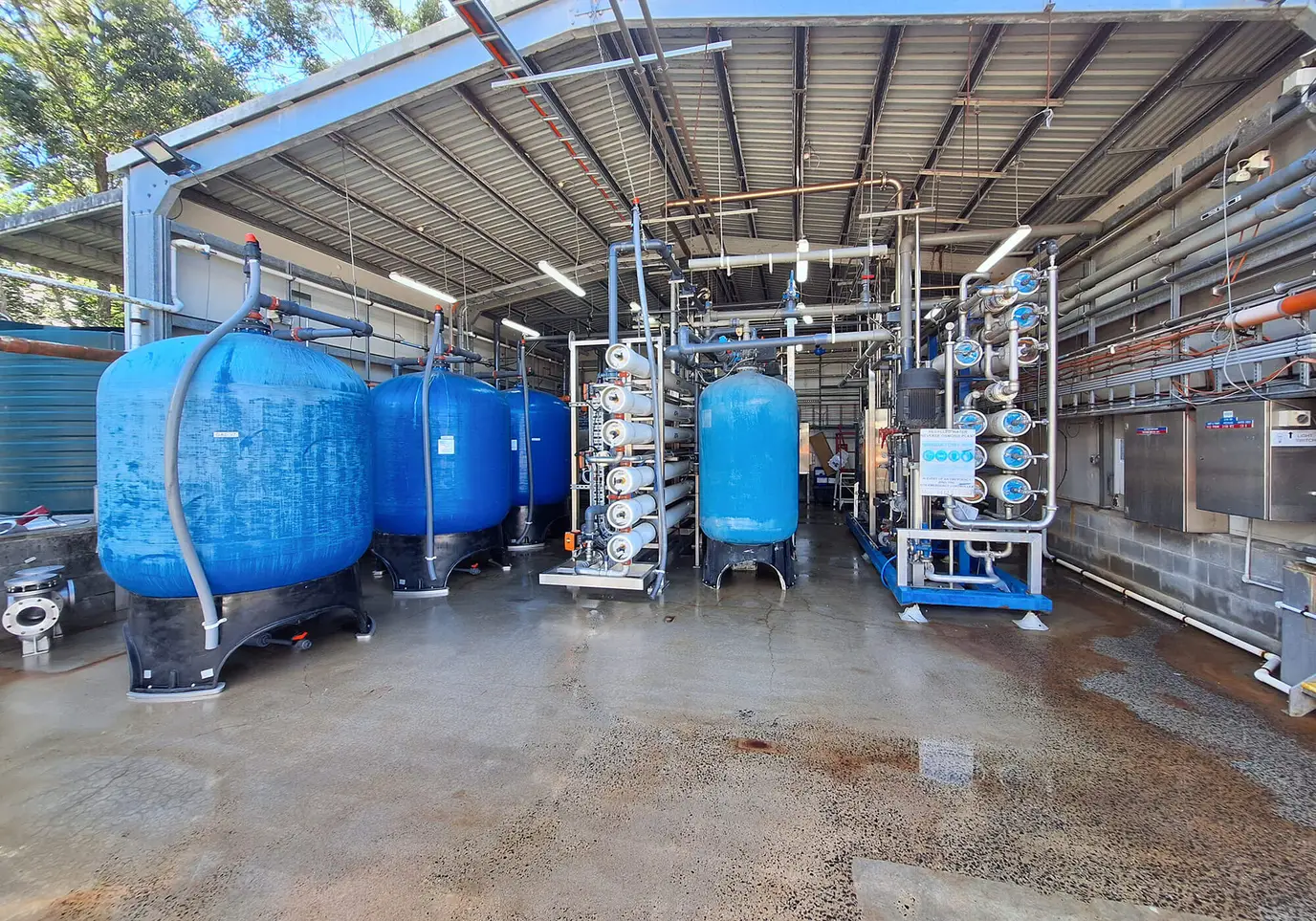
The team at Sanitarium’s Berkeley Vale manufacturing site embraced innovation to develop a recycling process that captures and treats wastewater, transforming it into high-purity water for reuse. Following the success of the pilot program, we upgraded Sanitarium’s recycling plant in 2025. Within the first year of its operation, the faculty recycled 157 megalitres of water – enough to meet the annual needs of over 1,000 Central Coast households!
The plant is anticipated to recycle more than 200 megalitres of water each year when running at full capacity, which is enough to fill 100 Olympic sized swimming pools. This will significantly reduce our reliance on external water supplies, preserving critical drinking water for the local community.
Meet the innovation trailblazers
An achievement of this magnitude requires seamless collaboration, technical excellence and immense dedication. To shed some light on how exactly we turn wastewater into a usable resource, we caught up with Sam Farrar, Sanitarium’s Environmental Manager, Manufacturing, to explore this fascinating journey of advanced engineering.
Sam, can you tell us about how wastewater is recycled?
“All wastewater on our site runs through one of two waterlines. The first carries all waste from kitchens and rest rooms, directing it directly to the council for treatment. The second manages all water associated with our manufacturing - from production wastewater to cleaning water, this makes its way to our onsite wastewater treatment plant. The first step is removing larger solids that may be present and balancing the water chemistry.
“From there, the water is transferred to an aeration pond. We add air (oxygen) into the water to create the perfect environment for millions of naturally occurring microbes. Think of them as a tiny clean-up crew. They feed on and break down the organic material in the wastewater, helping to clean and stabilise the water before it moves on to the next stage of the treatment process."
What happens from there?
“Once the microbes have done their job, we're left with two streams: solids and water. The solids are pressed and transported to local farms, where they're used as a nutrient-rich soil conditioner and fertiliser, while the remaining water then passes through a series of advanced filtration stages.”
“First, it moves through an ultra-fine membrane filter to remove any remaining particles, then it undergoes reverse osmosis, where it's pushed through specialised membranes under high pressure to remove dissolved salts, bacteria and other impurities.”
“By the end of the process, we've transformed wastewater into a recycled resource that can be reused across our operations."
A win for business efficiency and the planet
By reducing incoming water demand and wastewater discharge volumes, this recycling project is proving to be an essential resource that allows Sanitarium to ease pressures on Central Coast water resources. Beyond the environmental benefits, it also delivers operational efficiencies and cost savings, demonstrating that sustainability and business performance can go hand in hand.
Our team has embraced this innovative technology with immense pride knowing that recycling water at this scale creates meaningful benefits for our business, the local community and environment. A huge thank you to everyone whose expertise, dedication and collaboration has helped to bring this pioneering project to life.
What's next for environmental innovation at Sanitarium?
Plans are already underway for the next phase of Sanitarium’s sustainability journey, the creation of a new Wastewater Treatment Plant that will capture methane gas from various treatment processes. This recovered green energy will be fed directly into onsite boilers, cutting natural gas costs and steadily decreasing our carbon footprint.
Together, these two innovations are helping us build a more resilient and sustainable future, creating lasting value for our communities, environment, and generations to come.