6 common questions about reducing waste and recycling
While governments, organisations and industry work together to find solutions, there are actions you can take to make positive environmental change right now. To help you on this journey, we’ve answered some of the most common questions about reducing waste and recycling.
1. What are the recycling basics?
Recycling has become second nature to most of us, yet many people are still confused about which bin to use and what to do with those tricky materials like bottle caps and soft plastics.
Generally, most food packaging is either:
- Recyclable through kerbside bin collections
- Compostable
- Not recyclable
To recycle properly in Australia, it’s important to understand your local recycling guidelines, sort your waste correctly and clean food waste from packaging to minimise contamination at the point of recycling.
2. What can be recycled?
Recyclable materials generally include:
- Paper and cardboard: Newspapers, magazines and flattened cardboard boxes (clean and dry)
- Glass: Clear, green or brown bottles and jars (rinsed and with lids removed, no broken glass)
- Plastics: Hard plastics with recycling codes 1, 2 and 5 (check the Australasian Recycling Label on pack). Follow the ARL recommendations. Most common hard plastic items can be recycled but some items that are small, contaminated or made from certain types of plastics may not be suitable for recycling.
- Metals: Aluminium cans and steel containers (rinsed out)
Otherwise, common recycling mistakes to avoid include:
- Soft plastics: These should not generally go into the yellow recycling bin, apart from where specific schemes such as Curby are available. There are now many local council collection points for dropping off soft plastic items for recycling.
- Takeaway coffee cups: Often lined with plastic and not suitable for kerbside recycling
- Contaminated items: Recyclables should be clean and dry, as contamination can spoil entire batches
3. What are the different bins for?
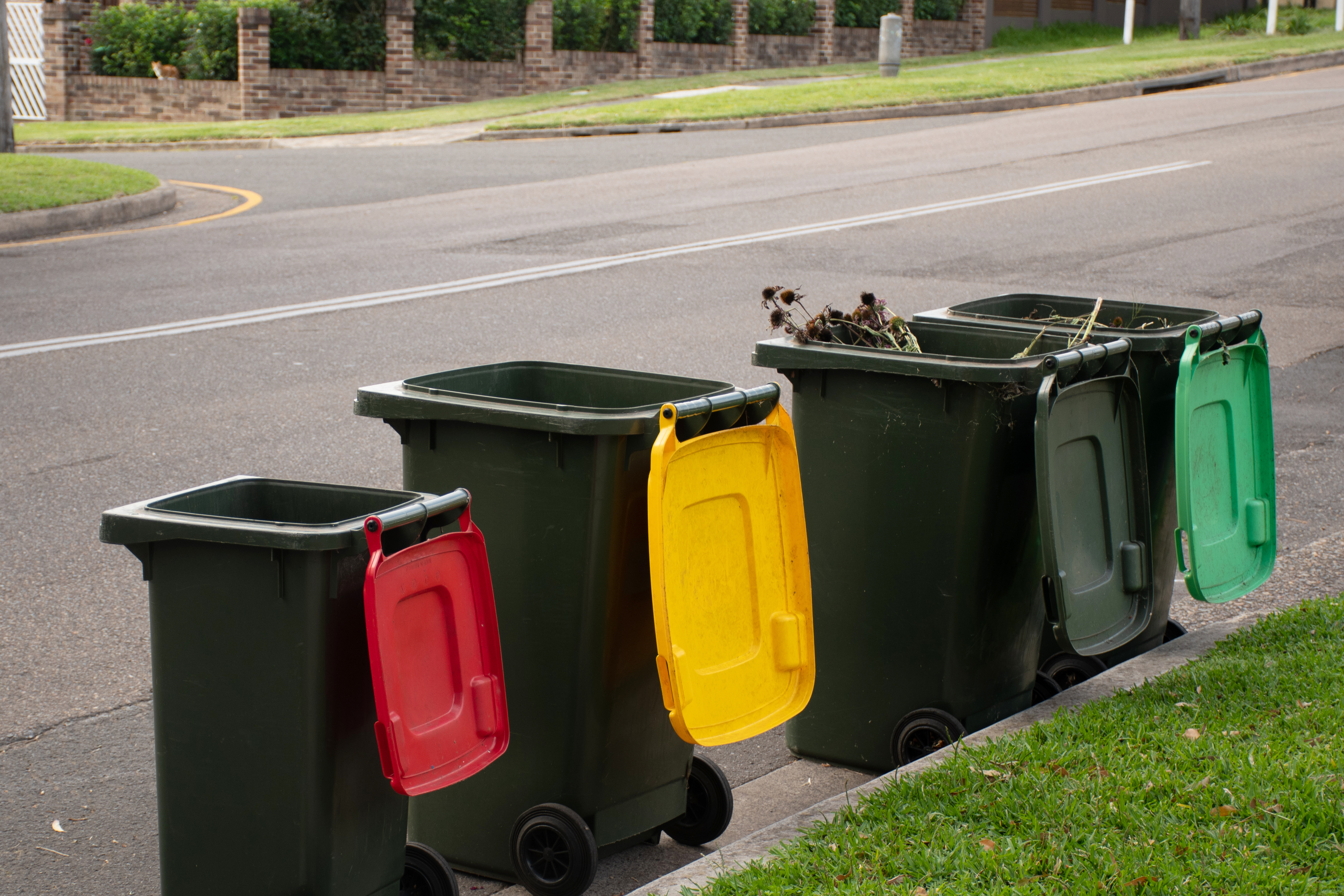
Australia typically uses a multi-bin system for waste collection, but this can vary state by state, so it’s important to check your local guidelines to understand what can and can’t be recycled in your area.
Typically, there are three bins:
- Yellow bin: Recyclable materials such as paper, cardboard, glass and certain plastics
- Red bin: General waste that cannot be recycled
- Green bin: Garden waste, and in some councils, organic waste including food scraps. Remember to check with your local council to ensure you comply with their requirements.
4. What resources are available to help?
There are a number of tools and services available to help you recycle correctly:
- Planet Ark’s Recycling Near You: A searchable website that shows what can be recycled in your local council area
- Recycle Mate app: Helps you identify how to recycle specific items based on your location
- Local council resources: Provide the most accurate and up-to-date recycling information
- Container Deposit Schemes: Available in many states, allowing you to return drink containers for a refund
You can also contact your local council directly for waste and recycling information.
5. What other steps can I take to make a positive environmental impact?
There are simple actions you can take to reduce waste and keep materials out of landfill:
- Cut your food waste wherever possible - over 35% of household rubbish to landfill is food waste
- Reduce your use of single-use items such as plastic bags
- Check recycling instructions on food packaging, including the Australasian Recycling Label
- Compost unavoidable food scraps to reuse them as a resource in your garden
6. How is Australia improving packaging and recycling?
The National Packaging Targets (NPTs) are a commitment from industry and government to transition towards a circular economy for packaging in Australia.
The targets aim for:
- 100% reusable, recyclable or compostable packaging
- 70% of plastic packaging to be recycled or composted
- 50% average recycled content in packaging
- The phase-out of problematic and unnecessary single-use plastics
While progress towards achieving these targets has been slower than desired, Sanitarium, through its membership of the Australian Packaging Covenant Organisation, remains committed to actions across the packaging value chain that will improve the sustainable use of packaging.
Steps we have taken to support improvements include:
- Switching from plastic to paper straws on our 250mL tetra packs,
- Moving from opaque to clear plastic bottles for our UP&GO range