What is the circular economy?
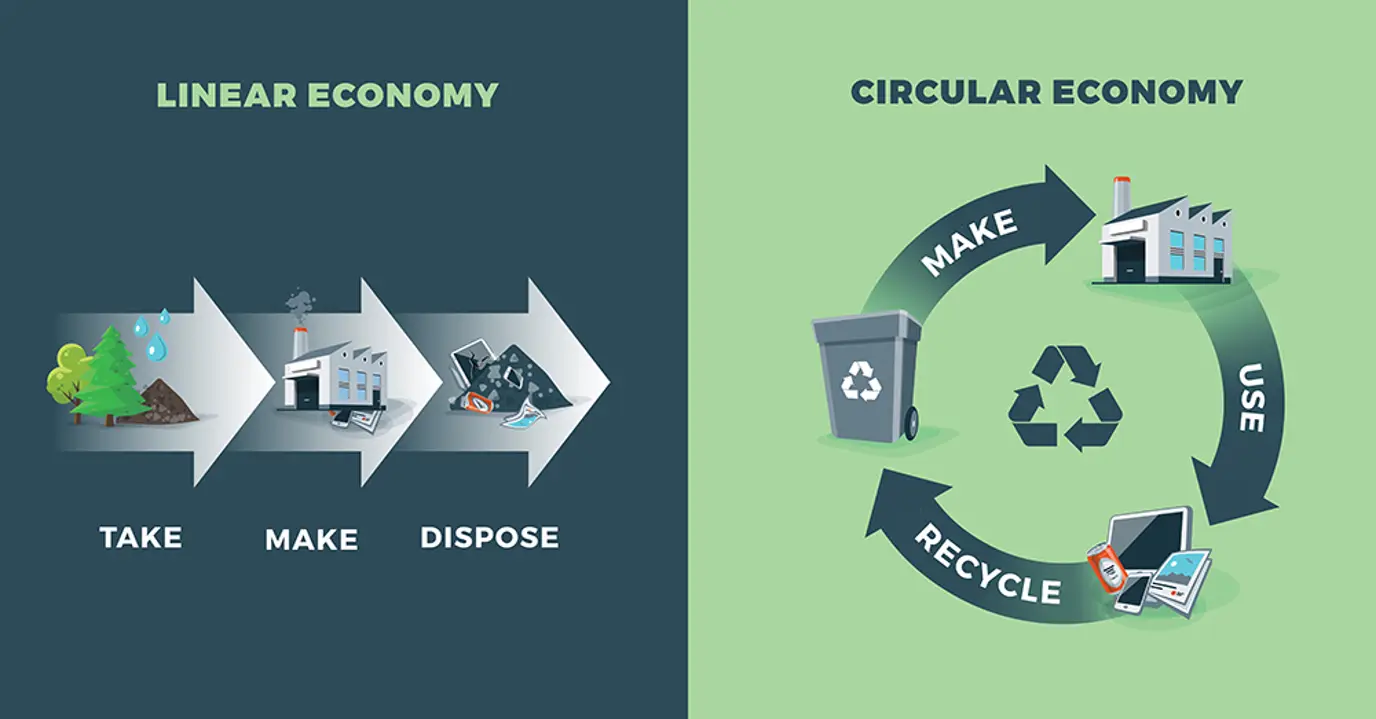
The circular economy is an innovative system for rethinking the way we use products and services for the benefit of society, the environment and business.
Instead of throwing things away after use, it focuses on keeping materials in use for longer - through reusing, recycling and designing out waste from the start.
Our society’s current economic model is mostly linear: we take materials, make products, then dispose of the products at the end of their lives. However, our growing waste problem, scarcity of resources and soaring carbon emissions are driving a global shift towards a more circular approach.
This approach draws inspiration from nature – where waste and pollution are designed out, products and materials are kept in use, and natural systems are regenerated – and applying this to production and consumption systems.
By keeping materials in use for longer, the circular economy helps reduce waste, lower emissions and protect natural resources.

How does Sanitarium contribute to the circular economy?
Respecting our planet is at the heart of Sanitarium, and we’re contributing to the creation of a circular economy by:
- Getting involved in the national soft plastics recycling scheme, which turns our packaging into other useful plastic products and keeps these materials in circulation.
Buying recycled materials, such as recycled paperboard content for transporting our products, which helps create a market for recycled products.
We use recycled content in our packaging.
We have also recently expanded our water recycling plant to give us the capacity to recycle up to 1-million litres of water per day.
Learn more about Australia’s circular economy and how it’s shaping a more sustainable future: Circular economy - DCCEEW.